
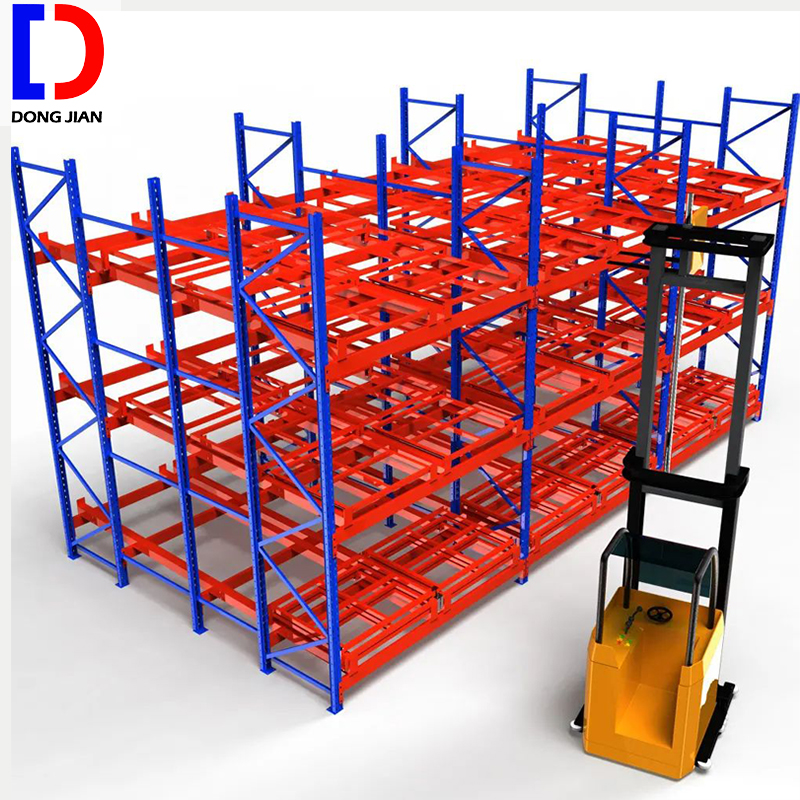
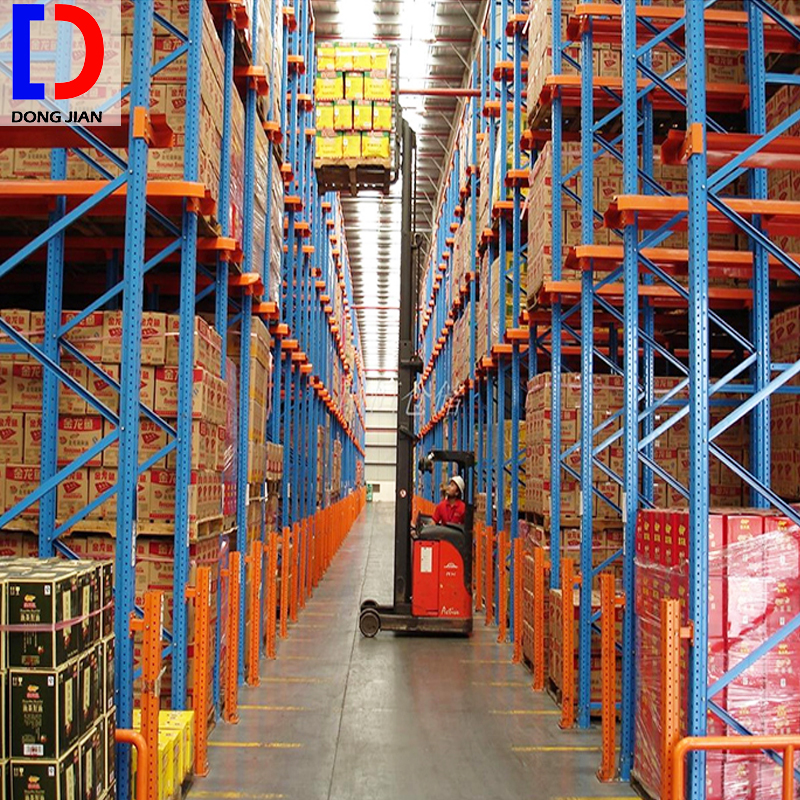
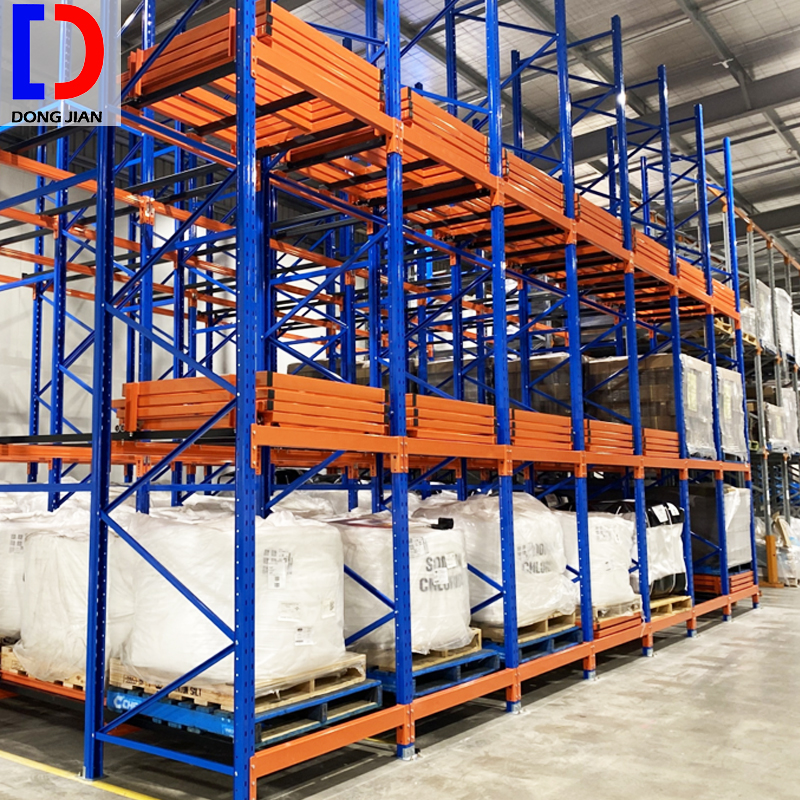
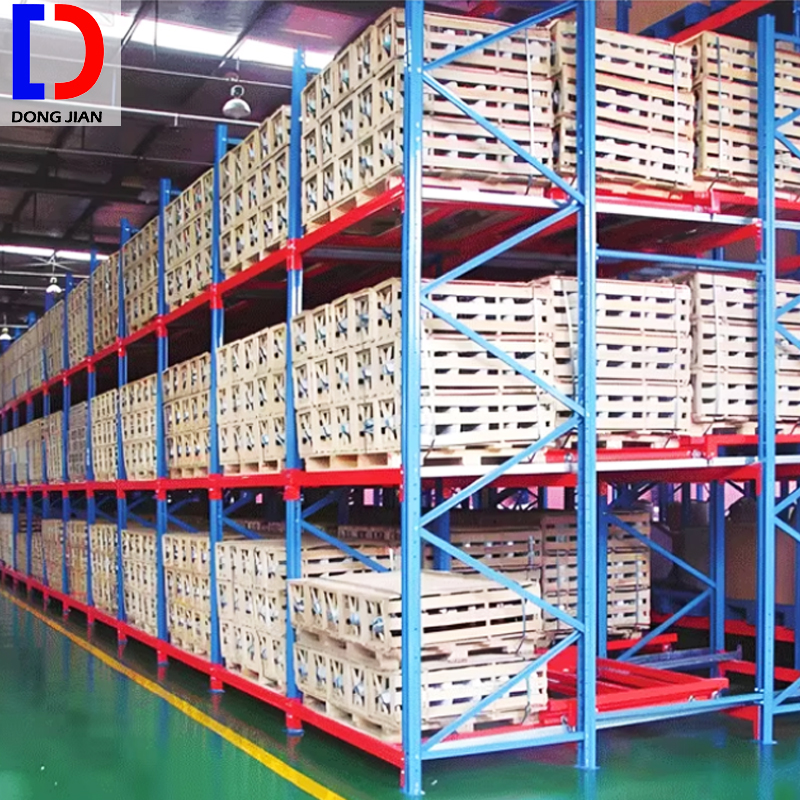
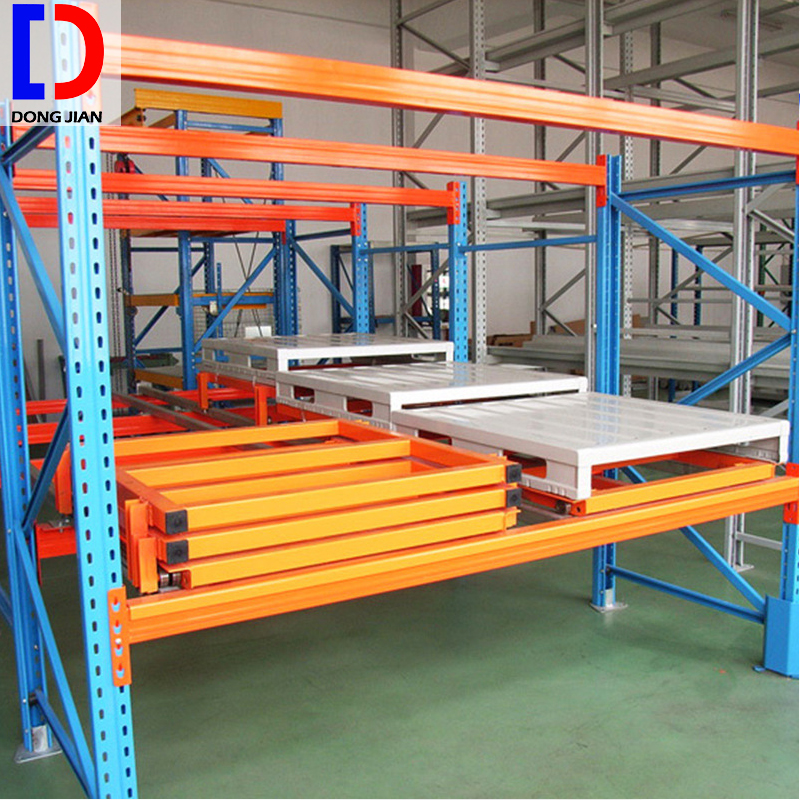
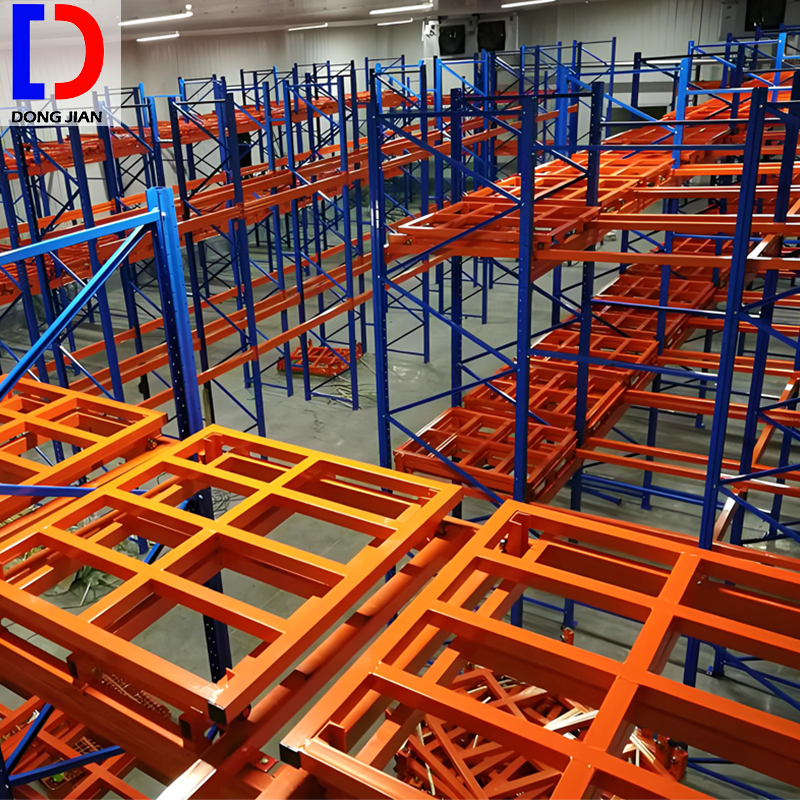
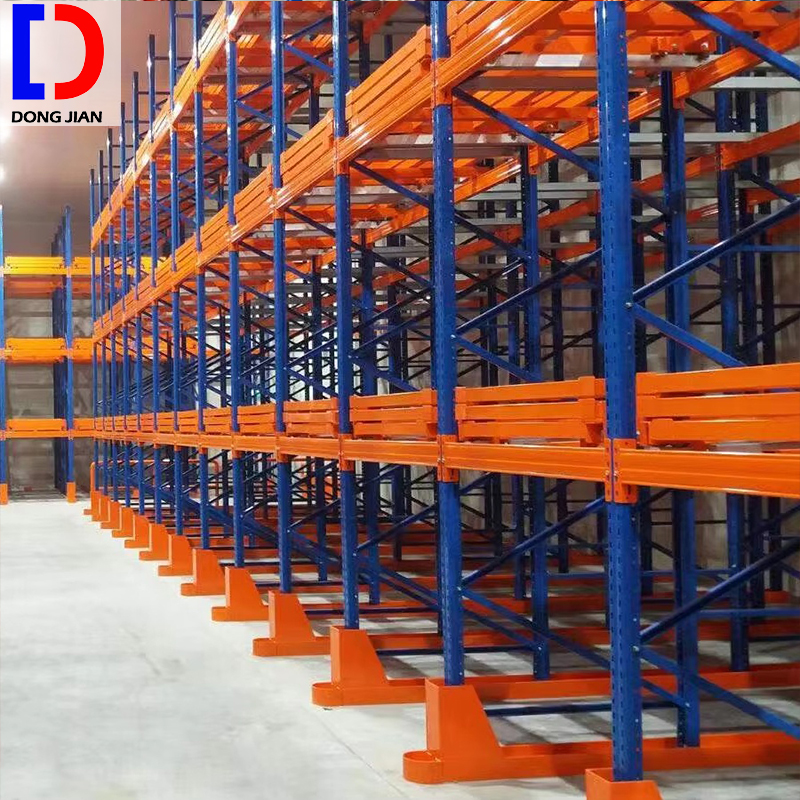
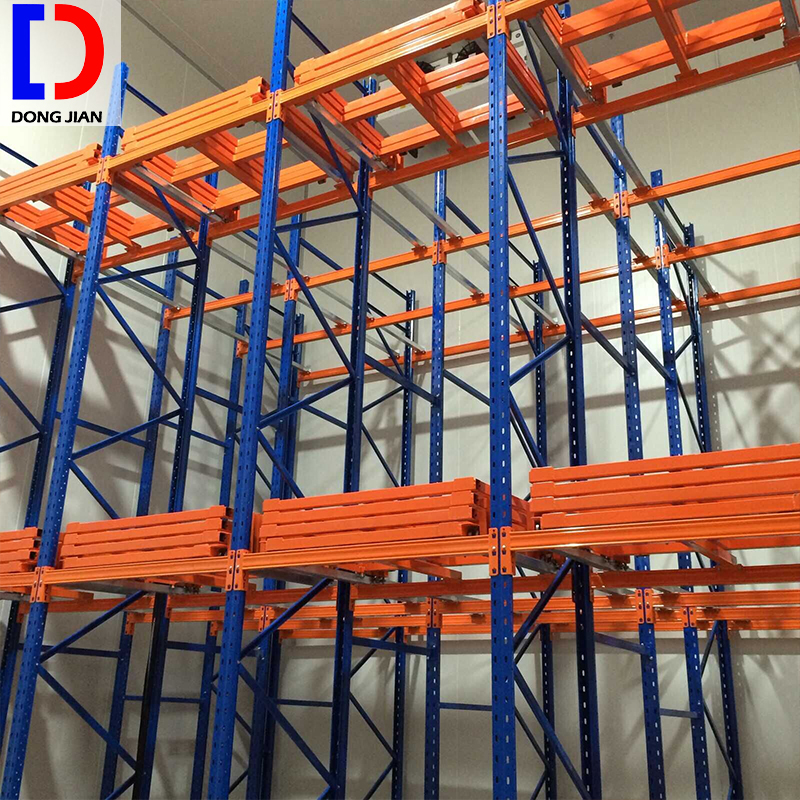
Push back racking is a high-density pallet storage system designed for warehouses that require maximum space utilization with fast pallet handling.
The system operates on a Last-In-First-Out (LIFO) principle, where pallets are stored 2–6 deep per lane on gravity-driven carts that move along inclined rails.
This solution is widely used in operations with low to medium SKU variety, where storage density and throughput are more critical than FIFO inventory rotation.
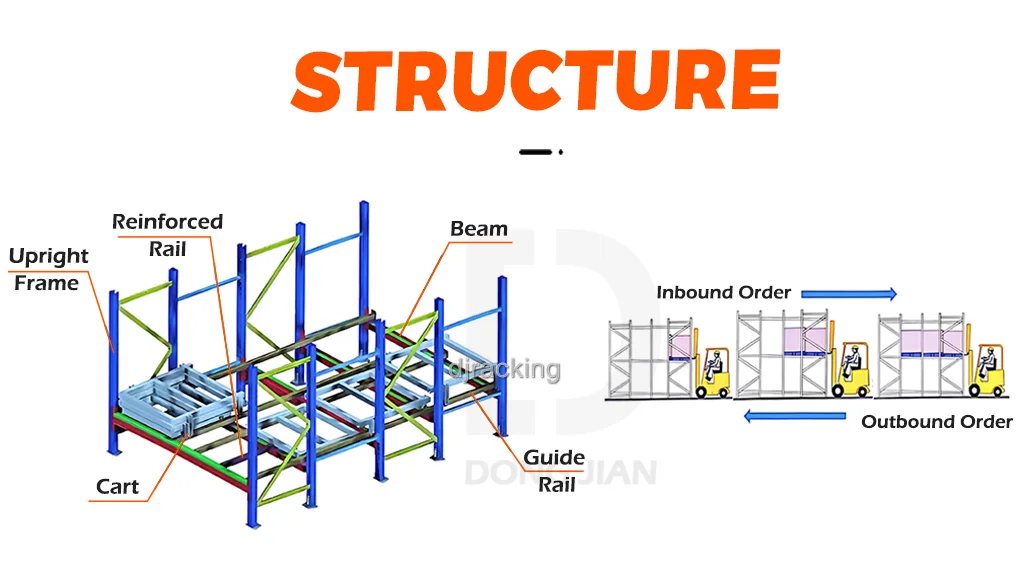
Storage principle: LIFO (Last-In-First-Out)
Pallet depth: 2 to 6 pallets deep per lane
Handling method: Forklift access from a single aisle
Operating mechanism: Gravity-driven nested carts
Typical environments: Ambient, chilled, and cold storage warehouses
Push back racking systems are selected when warehouse operators need to balance storage density, accessibility, and operational speed.
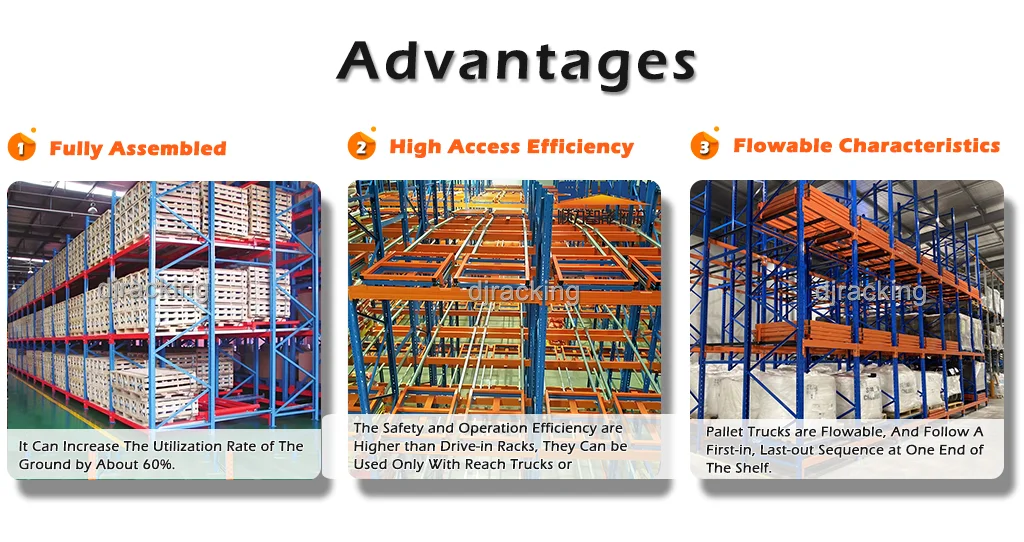
Main advantages include:
Increased storage density compared to selective racking
Faster pallet handling with reduced forklift travel
Independent SKU per lane (better selectivity than drive-in racking)
Fewer aisles required, maximizing floor space utilization
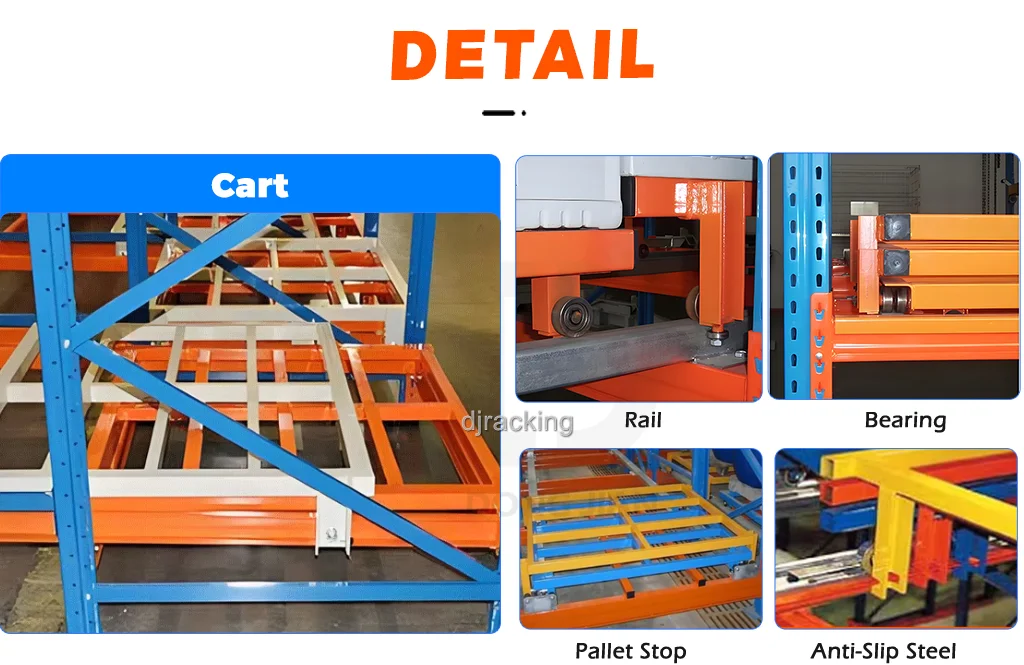
A pallet is loaded onto the front cart using a forklift
Each new pallet pushes the existing pallets backward along the rail
Carts nest together as pallets are added
During retrieval, gravity returns the front pallet to the pick face
Only the front pallet is accessible at any time, making the system suitable for LIFO inventory flows.
| Parameter | Typical Range |
|---|---|
| Pallet depth | 2–6 pallets |
| Maximum pallet weight | Up to XXXX kg (customizable) |
| Pallet size compatibility | Standard & non-standard pallets |
| Rail inclination | Engineered for controlled pallet flow |
| Cart construction | Heavy-duty steel frame |
| Wheel type | Polymer or steel wheels |
| Finish | Powder-coated or galvanized |
| Compliance | FEM / RMI / local standards |
Exact specifications depend on pallet weight, depth, and project requirements.
Push back racking systems can be customized to suit specific operational needs:
Pallet dimensions and weight capacity
Lane depth and bay configuration
Cart wheel material (noise, durability, temperature resistance)
Structural steel grade and corrosion protection
Seismic and safety accessories
Speed controllers to regulate pallet return velocity
Front pallet stops and backstops for load control
Structural design based on pallet load and seismic requirements
Designed to minimize forklift entry into rack structure
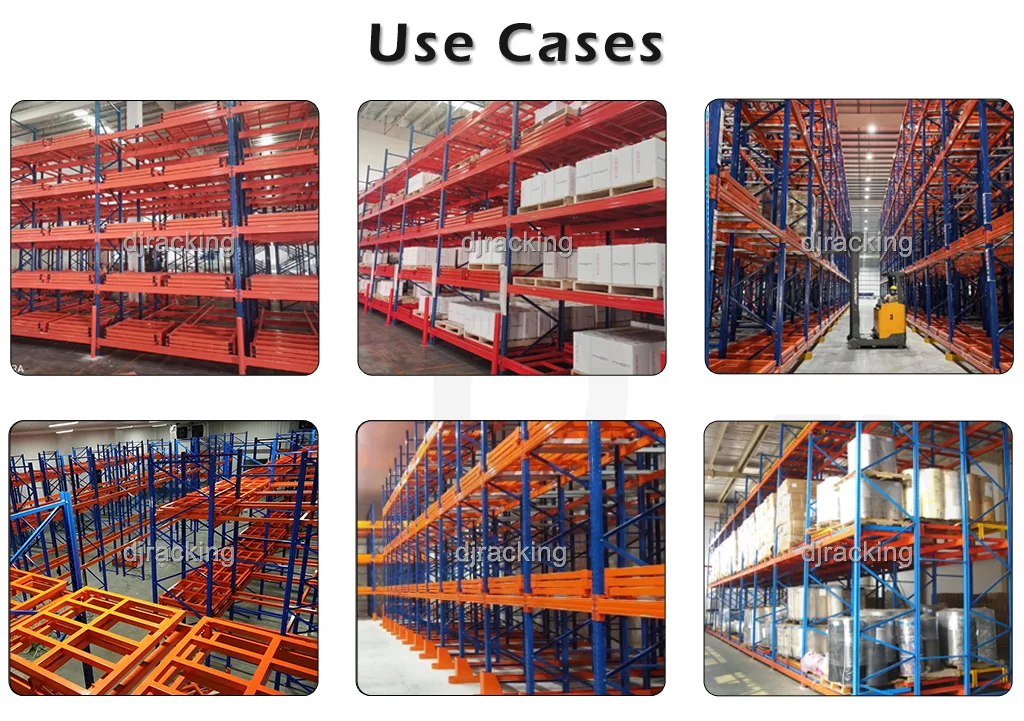
Push back racking systems are commonly used in:
Food & beverage distribution centers
Cold storage and freezer warehouses
Manufacturing buffer storage
FMCG and retail distribution
High-throughput pallet storage areas
Multiple pallets per SKU
High storage density requirements
Fast loading and unloading operations
Limited warehouse floor space
Operations requiring FIFO inventory rotation
High SKU variety with low pallet quantity
Inconsistent or damaged pallet quality
Extremely high seismic zones without specialized design
Each push back racking system is engineered based on project-specific parameters, including pallet load, warehouse layout, and safety requirements.
👉 Contact our engineering team to receive:
Layout proposals
Load calculations
System specifications
Project-based quotation