
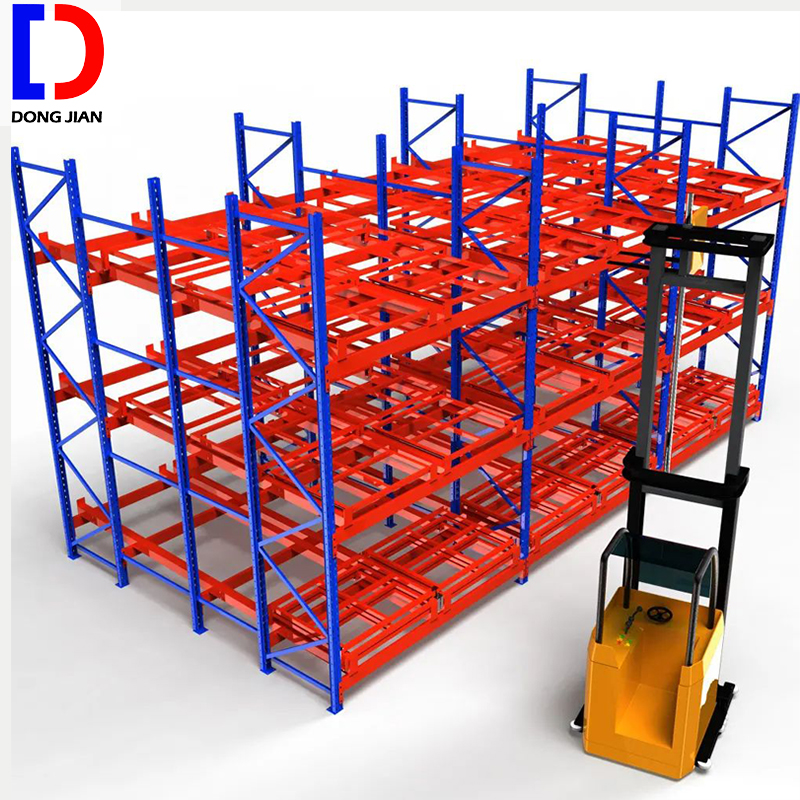
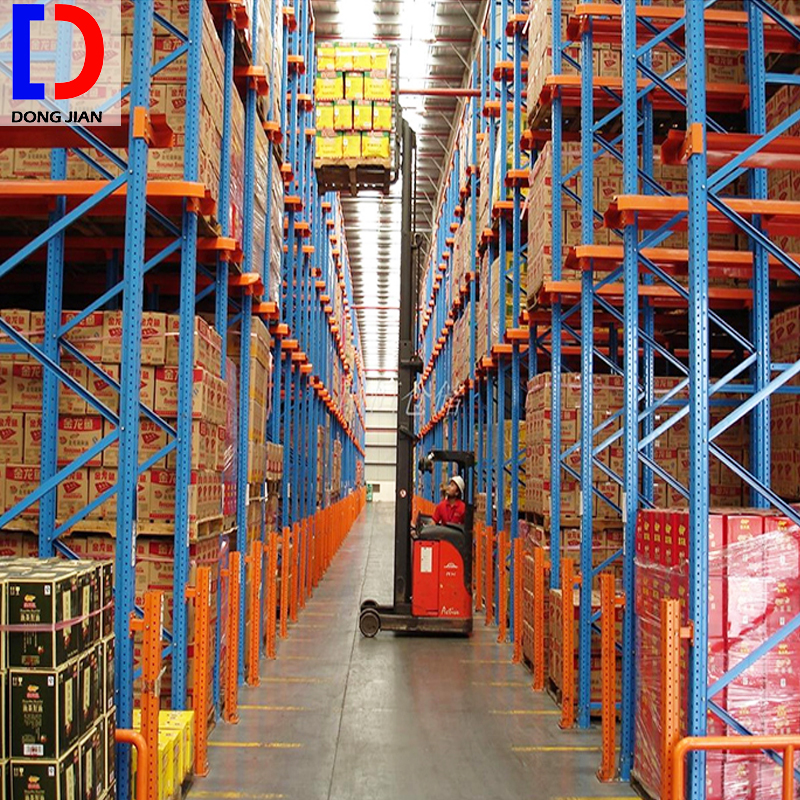
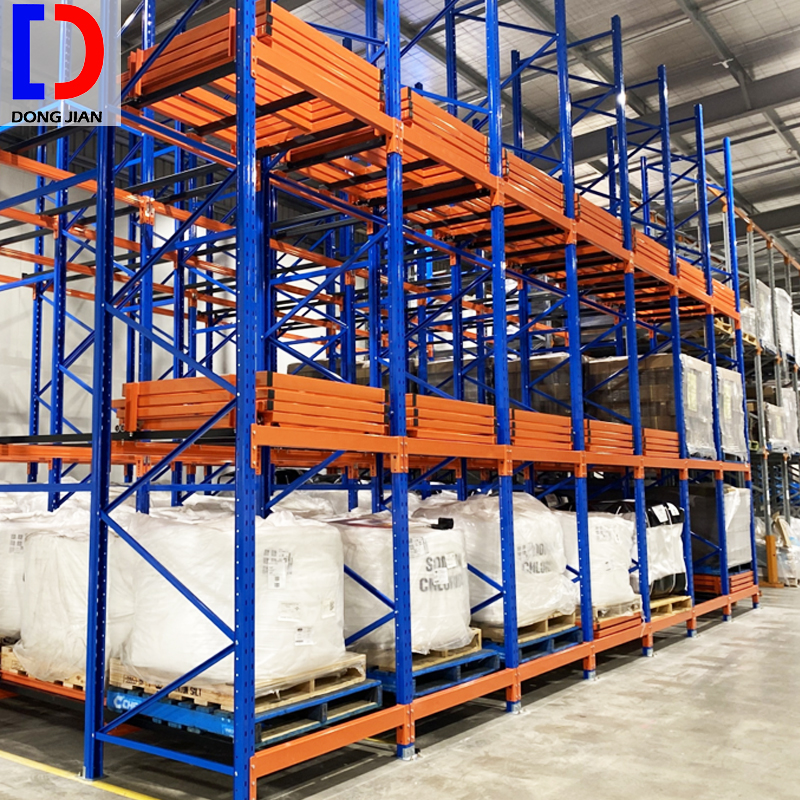
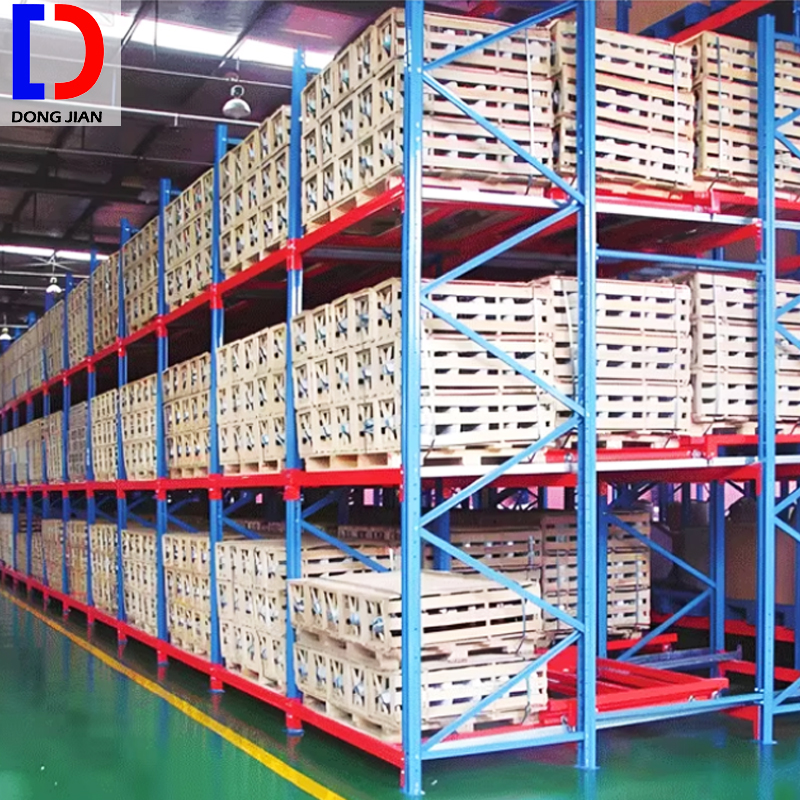
High-density LIFO pallet storage for warehouses that need more storage capacity without adding more aisles.
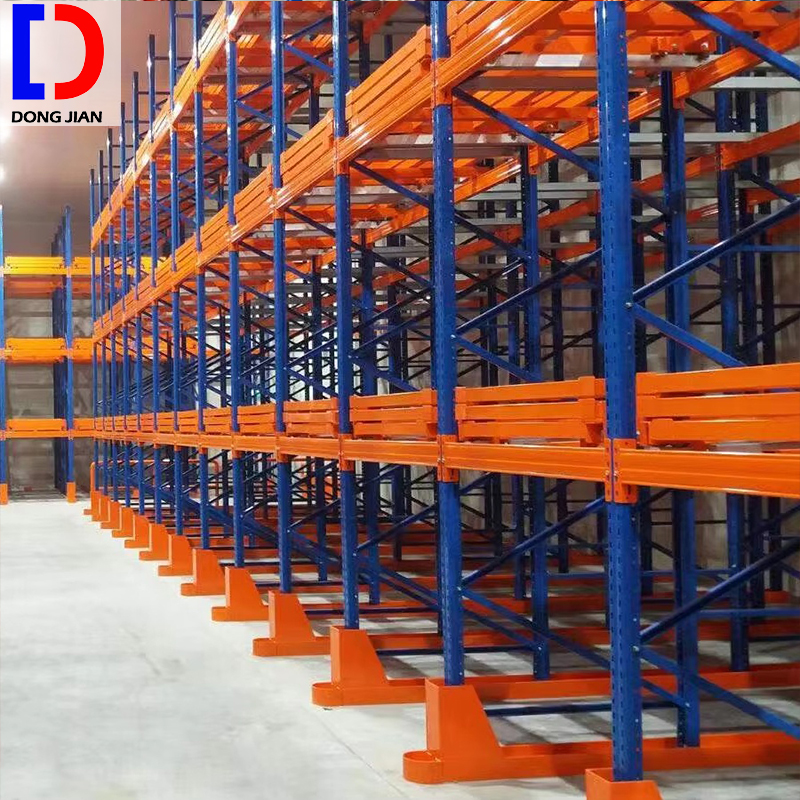
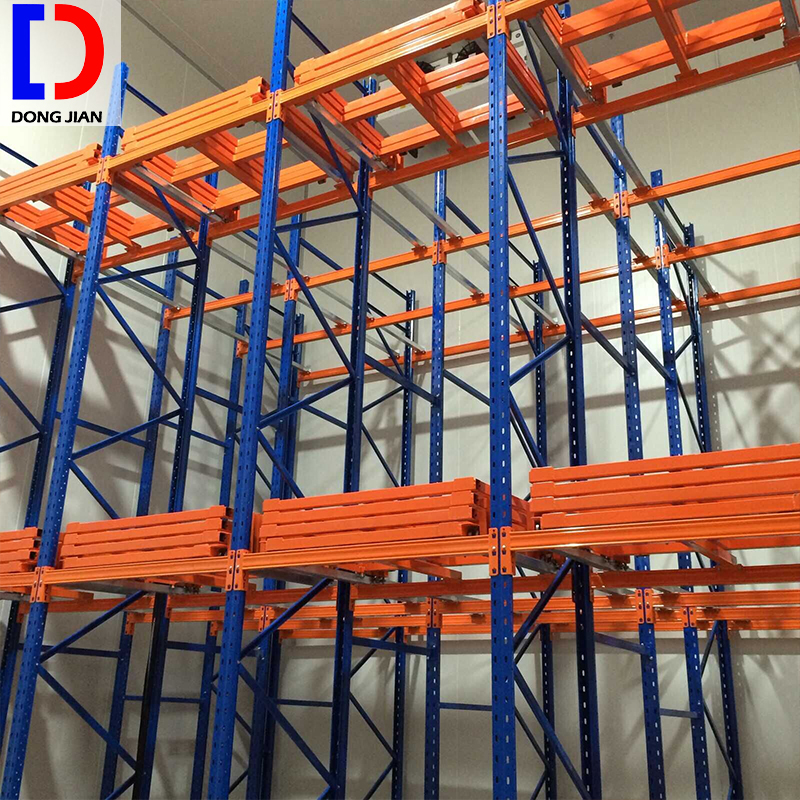
Push back pallet racking is a high-density warehouse racking system where pallets are stored on nested carts or inclined rails and loaded from the front aisle. It is commonly used for warehouses that store multiple pallets per SKU and can operate with LIFO inventory rotation.
Compared with standard selective pallet racking, a push back rack can store several pallets deep in each lane. However, its suitability depends on pallet quality, pallet weight, SKU quantity, lane depth, forklift operation, product stability, floor condition and inventory flow.
| Item | Description |
|---|---|
| Product Name | Push Back Pallet Racking System |
| Storage Method | Multiple pallets stored in depth on carts or rails |
| Inventory Flow | LIFO, last-in first-out |
| Access Method | Loading and unloading from the front aisle |
| Common Use | Medium-to-high density pallet storage |
| Suitable Loads | Standard palletized goods with stable load condition |
| Key Design Factors | Pallet size, pallet weight, lane depth, cart system, forklift access and floor condition |
| Buyer Type | Distributors, warehouse owners, EPC contractors and system integrators |
Short Note:
Push back racking can improve storage density in suitable applications, but it is not the best choice for every warehouse. SKU structure, pallet condition, LIFO acceptance, forklift operation and maintenance access should be checked before selecting this system.
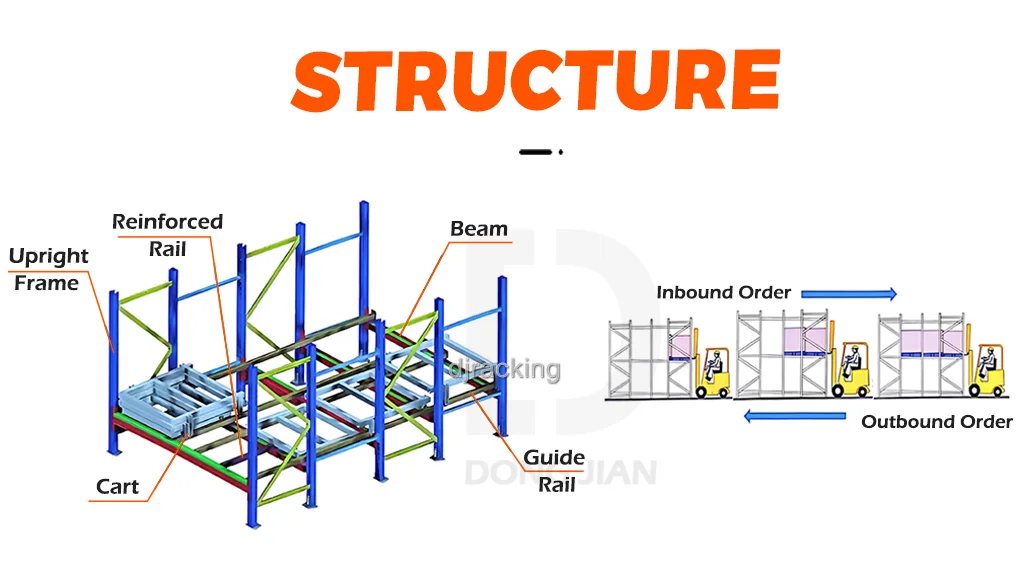
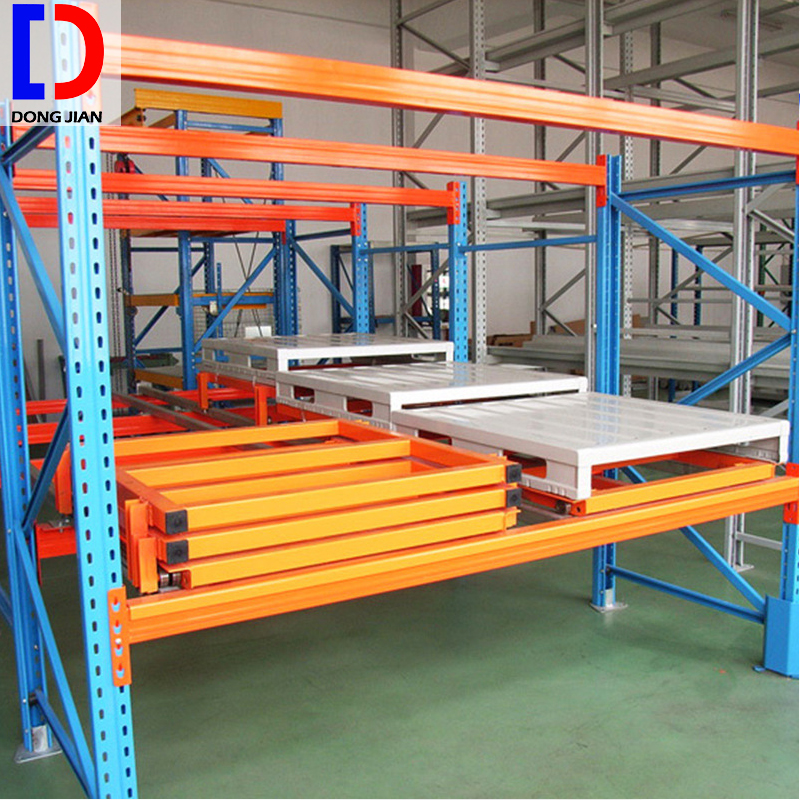
Push back pallet racking is a pallet storage system that allows pallets to be stored several positions deep in each lane. Pallets are usually placed on nested carts or a guided rail structure. When a new pallet is loaded from the aisle, it pushes the previous pallet backward. When the front pallet is removed, the rear pallet moves forward to the picking position.
This system is often selected when a warehouse needs higher storage density than selective pallet racking but wants easier front-aisle operation compared with drive-in racking.
Push back racking is commonly used for:
Important:
Push back pallet racking is usually a LIFO storage system. If your warehouse requires strict FIFO inventory rotation, pallet flow racking may be a more suitable option.
A push back racking system works from one aisle. The forklift loads and unloads pallets from the same front side of the rack.
The forklift places the first pallet onto the cart or rail position inside the lane.
When the second pallet is loaded, it pushes the first pa
llet backward into the lane.
The lane can be configured for different pallet depths depending on the warehouse layout, pallet size, load weight and operation requirements.
During unloading, the front pallet is removed first. The pallet behind it moves forward to the picking position.
Because the last pallet loaded is usually the first pallet re
moved, push back racking is normally used for LIFO inventory applications.
Best-fit situation:
Push back racking is more suitable when each SKU has multiple pallets and the warehouse does not need direct access to every individual pallet.
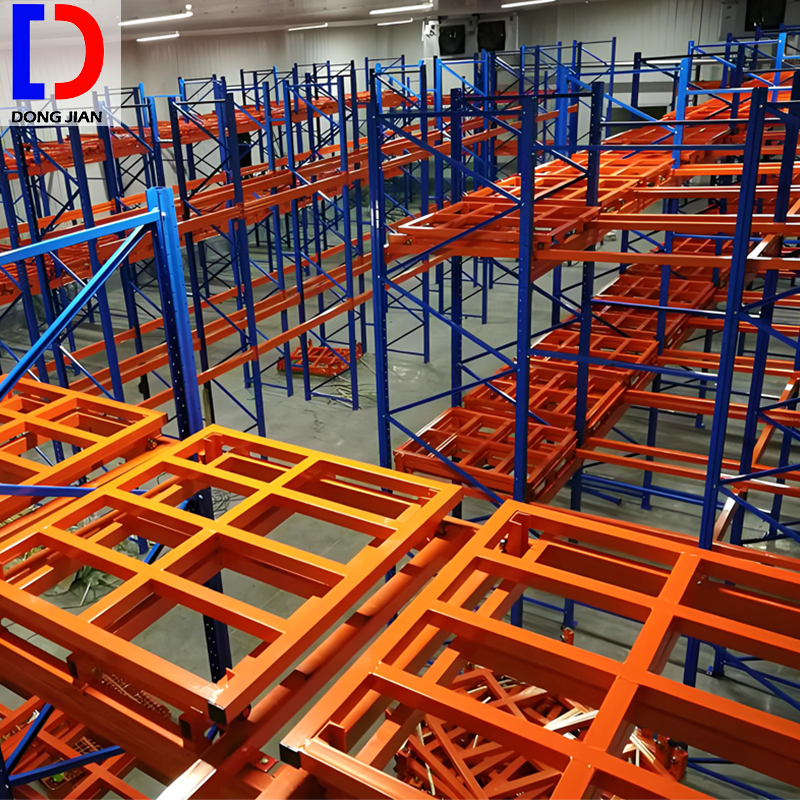
A complete push back pallet racking system includes more than upright frames and beams. The cart or rail structure is critical to the system’s performance.
| Component | Function |
|---|---|
| Upright Frames | Support vertical rack loads and define rack height and depth |
| Load Beams | Carry pallet loads and connect rack frames |
| Push Back Carts | Support pallets and move backward or forward inside the lane |
| Rails | Guide carts and support pallet movement |
| Pallet Stops | Help control pallet position |
| Row Spacers | Connect back-to-back rack rows and improve alignment |
| Bracing | Supports the upright frame structure |
| Base Plates & Anchors | Transfer rack loads into the warehouse floor |
| Safety Locks | Help secure beams in position |
| Rack Protectors | Reduce impact damage from forklift traffic |
| Load Labels | Show approved load information for the rack configuration |
Engineering Note:
The cart, rail and beam configuration should
be selected according to pallet weight, pallet quality, lane depth and expected operating frequency. A low-detail quotation may miss important components such as pallet stops, rack protectors, row spacers or anchors.
Push back warehouse racking can be a suitable option when storage density is important but full direct access to every pallet is not required.
| Warehouse Condition | Suitability |
|---|---|
| Several pallets per SKU | Suitable |
| LIFO inventory flow is acceptable | Suitable |
| Need higher density than selective racking | Suitable |
| Need easier front-aisle operation than drive-in racking | Often suitable |
| Standard pallet sizes and stable loads | Suitable |
| Limited aisle space | Often suitable |
| High SKU variety with one pallet per SKU | Usually not ideal |
| Strict FIFO requirement | Usually not ideal |
| Poor pallet condition | Requires careful review |
| Unstable or irregular loads | Requires careful review |
Push back racking is often a good fit for warehouses that want to reduce aisle space while keeping relatively convenient front-aisle loading and unloading.
Push back racking is not suitable for every warehouse. It may not be the best choice when:
For high-SKU warehouses where each pallet must be directly accessible, selective pallet racking may be a more practical option. For strict FIFO applications, pallet flow racking may be more suitable.
Push back racking dimensions should not be selected only from a standard catalogue. The rack layout should be based on actual warehouse dimensions, pallet size, load height, forklift type and desired storage capacity.
Key dimension factors include:
Push back racking can be configured in different lane depths depending on the project. If your warehouse requires 2-deep, 3-deep, 4-deep, 5-deep or deeper storage, the cart system, rail design, pallet weight and forklift operation should be reviewed together.
Important:
A deeper lane does not automatically mean better warehouse performance. Lane depth should match SKU quantity, inventory turnover, pallet stability and operating speed.
Rack height should be reviewed together with:
Final rack configuration should be confirmed according to project-specific warehouse drawings, pallet load information, equipment parameters and applicable local requirements.
Push back pallet racking capacity depends on the complete rack configuration, not only the beam size.
Important load factors include:
Push back racking depends on stable pallet movement. Damaged pallets, weak pallet bottoms or irregular loads may increase the risk of poor movement or load instability.
Before confirming a push back rack design, buyers s
hould check:
If pallet quality is inconsistent, a different racking system or additional support structure may be required.
Different pallet racking systems solve different warehouse problems. Push back racking should be selected based on inventory flow, SKU quantity, pallet access and storage density—not only warehouse area.
| Racking System | Best For | Pallet Access | Storage Density | Inventory Flow |
|---|---|---|---|---|
| Selective Pallet Racking | High SKU variety and direct pallet access | Direct access to each pallet | Medium | FIFO or flexible |
| Drive-In Racking | Large batches of similar pallets | Limited individual access | High | Usually LIFO |
| Push Back Racking | Multiple pallets per SKU with faster front access | Front-aisle access by lane | High | LIFO |
| Pallet Flow Racking | High-turnover inventory | Front loading / rear unloading | High | FIFO |
| Radio Shuttle Racking | Deep-lane high-density storage | Shuttle-assisted access | Very high | Project-dependent |
Choose push back racking when you need more storage density and can accept lane-based pallet access. Choose selective racking when direct access to every pallet is more important than storage density.
Push back racking can offer easier front-aisle operation compared with drive-in racking because forklifts do not need to enter the rack lane. Drive-in racking may provide high density for large batches of the same SKU but offers less direct pallet access.
Push back racking is usually LIFO. Pallet flow racking is usually FIFO. If inventory rotation is strict, pallet flow may be more suitable.
Push back racking cost depends on the full system configuration, not only the rack size.
Main cost factors include:
A cheaper push back rack quote may not include the same lane depth, cart design, pallet supports, protectors, anchors, installation guidance or freight terms.
Before comparing prices, confirm whether each supplier is quoting based on the same:
Buyer Tip:
Do not compare only price per pallet position. Compare the design basis and supply scope behind the price.
High density is useful only when it matches SKU structure, inventory flow and operating method. If the warehouse has many SKUs with very few pallets per SKU, selective racking may work better.
Push back racking is normally used for LIFO storage. If the warehouse requires FIFO, pallet flow racking or another system should be considered.
Poor pallet condition can affect cart movement, load stability and system performance.
A 2-deep system and a 5-deep system are not the same. Lane depth affects cart quantity, rail structure, load, installation and price.
Forklift type, aisle width, turning radius and operator skill should be considered before confirming the layout.
Product price does not always include packaging, freight, loc
al delivery, unloading, installation, anchors, protection accessories or site measurement.
Push back carts and rails should remain accessible for inspection and maintenance. High-frequency use may require closer attention to moving components.
To prepare a reliable layout and quotation, please provide the following project information.
CTA Text:
Send your warehouse layout, pallet dimensions, maximum pallet weight and required pallet positions for an initial push back racking layout review.
DJ Storage Rack designs and manufactures custom warehouse racking systems for distributors, EPC contractors, system integrators and industrial warehouse projects.
We support push back pallet racking projects with:
Our role is not only to supply rack components. We help buyers review the warehouse layout, pallet storage requirements, forklift operation and project scope before production.
Positioning Statement:
DJ Storage Rack is a China-based warehouse racking manufacturer and custom storage system provider for industrial warehouse projects worldwide.
Provide warehouse layout, pallet dimensions, pallet weight, SKU information and required pallet positions.
Our team reviews whether push back racking is suitable based on lane depth, inventory flow, forklift access and warehouse space.
We prepare a preliminary rack configuration based on your storage requirement and project conditions.
We provide a project-based quotation including rack components, main accessories, packaging and delivery terms according to agreed scope.
After confirmation, the rack system is manufactured, packed and shipped according to project requirements.
If push back racking is not the best fit for your warehouse, these systems may be considered.
Best for warehouses that need direct access to each pallet and high SKU flexibility.
Headline:
Need a Push Back Racking Quote for Your Warehouse Project?
Text:
Send your warehouse layout, pallet dimensions, maximum pallet weight, required pallet positions and forklift information. DJ Storage Rack can help review whether push back pallet racking is suitable for your warehouse and prepare a project-based quotation.
Primary CTA:
Request a Push Back Racking Quote
Secondary CTA:
Send Warehouse Layout for Review
Contact Information:
WhatsApp / Phone: +86 1935551 8784
Email: info@dj-rack.com
Push back pallet racking is a high-density pallet storage system where pallets are stored on nested carts or guided rails and loaded from the front aisle. It is commonly used for LIFO inventory storage.
The forklift loads pallets from the front aisle. Each new pallet pushes the previous pallet backward into the lane. When the front pallet is removed, the pallet behind it moves forward to the picking position.
Push back racking is normally used for LIFO storage. If strict FIFO inventory rotation is required, pallet flow racking may be a better option.
Lane depth depends on pallet size, pallet weight, load stability, cart structure, forklift operation and warehouse layout. Common project discussions may include 2-deep, 3-deep, 4-deep, 5-deep or deeper lane configurations, but the final depth should be reviewed based on project requirements.
Main cost factors include rack height, lane depth, pallet weight, cart and rail structure, beam and upright configuration, safety accessories, surface treatment, packaging, freight terms and installation scope.
No. Push back racking requires stable pallets with suitable bottom support and consistent load condition. Damaged pallets, weak pallet bottoms or unstable loads may require additional review or another storage system.
Push back racking stores pallets on carts or rails and is loaded from the front aisle. Drive-in racking requires forklifts to enter the rack lane. Push back racking usually offers easier front-aisle operation, while drive-in racking may be suitable for large batches of similar pallets.
You should provide warehouse layout, clear height, pallet dimensions, maximum pallet weight, loaded pallet height, number of SKUs, pallets per SKU, required pallet positions, forklift model, destination port and installation scope.