Short Answer
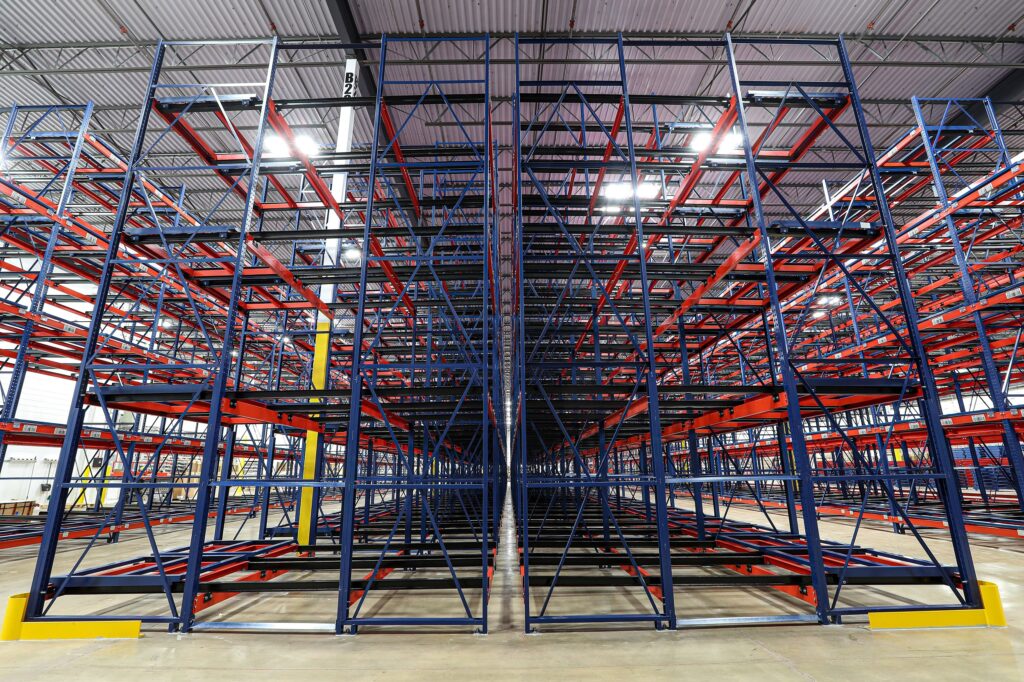
Push back racking is a high-density pallet storage system that stores pallets 2–6 deep per lane on gravity-driven carts, operating on a Last-In-First-Out (LIFO) basis.
It is best suited for warehouses with low to medium SKU variety, where storage density and fast pallet handling are more important than FIFO inventory rotation.
What Is Push Back Racking?
Push back racking is a dynamic pallet racking system designed to maximize warehouse space by storing multiple pallets deep on a slight incline.
Each pallet sits on a wheeled cart.
When a new pallet is loaded, it pushes the previous pallet backward.
During retrieval, gravity moves the pallets forward to the pick face.
Unlike drive-in racking, each lane holds a single SKU, offering better selectivity while still achieving high storage density.
How Does Push Back Racking Work?
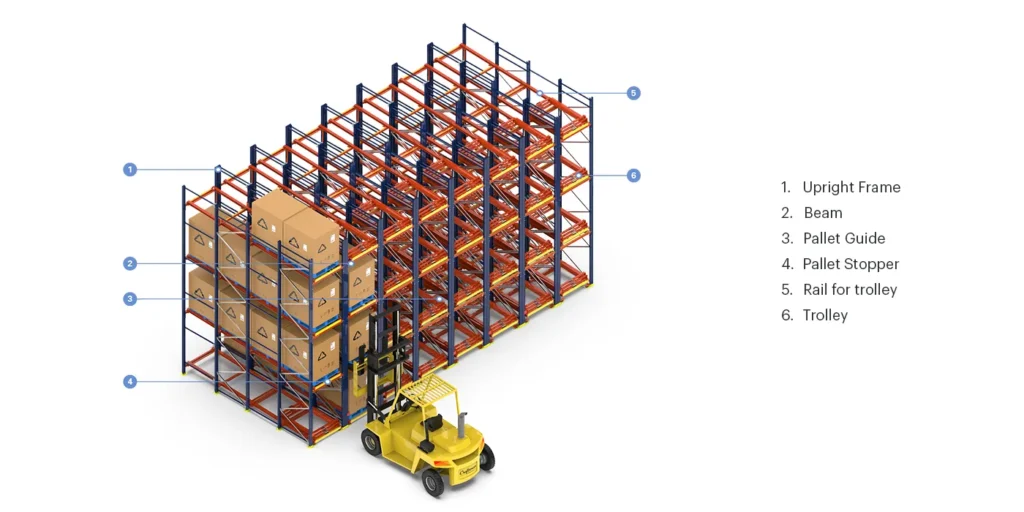
The system follows a simple gravity-assisted process:
- A forklift places a pallet on the front cart
- Each additional pallet pushes the previous ones backward
- Carts nest together as pallets are loaded
- When the front pallet is removed, gravity returns the next pallet forward
Because loading and unloading occur from the same aisle, the system operates on a LIFO (Last-In-First-Out) principle.
Key Advantages of Push Back Racking
Push back racking is often selected when warehouses need to balance density, accessibility, and operational efficiency.
Main benefits include:
- High storage density compared to selective pallet racking
- Fewer aisles required, maximizing floor space utilization
- Independent SKU per lane, unlike drive-in systems
- Fast pallet handling with reduced forklift travel
- Improved safety, as forklifts do not enter rack lanes
Limitations and Disadvantages
While effective in many scenarios, push back racking is not suitable for every operation.
Key limitations to consider:
- Operates on LIFO, not suitable for FIFO inventory requirements
- Higher initial cost than selective racking
- Requires consistent pallet quality for smooth operation
- Lower SKU variety compared to selective systems
- Requires proper design in seismic zones
Push Back Racking vs Other Storage Systems
Push Back vs Drive-In Racking
| Feature | Push Back | Drive-In |
|---|---|---|
| Storage principle | LIFO | LIFO |
| Forklift entry | No | Yes |
| SKU per lane | One | One |
| Safety | Higher | Lower |
| Throughput | Higher | Lower |
Push Back vs Pallet Flow Racking
| Feature | Push Back | Pallet Flow |
|---|---|---|
| Inventory flow | LIFO | FIFO |
| Cost | Lower | Higher |
| Aisle access | One side | Two sides |
| Complexity | Medium | High |
Push Back vs Selective Racking
| Feature | Push Back | Selective |
|---|---|---|
| Storage density | High | Low |
| Selectivity | Medium | High |
| Cost | Medium | Low |
| Best for | Low–medium SKU | High SKU variety |
When Is Push Back Racking a Good Choice?
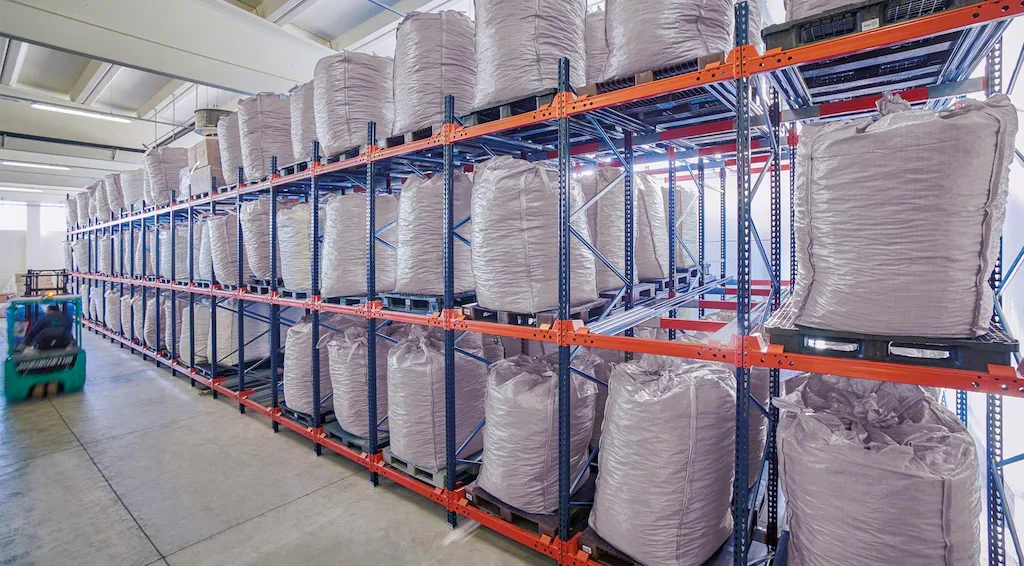
Push back racking performs best in environments with:
- Multiple pallets per SKU
- High space utilization requirements
- Fast loading and unloading operations
- Limited warehouse floor area
- Cold storage or temperature-controlled facilities
When Should Push Back Racking Be Avoided?
Push back racking may not be the best option if:
- FIFO inventory rotation is mandatory
- SKU variety is very high with low pallet quantities
- Pallets are damaged or inconsistent in size
- Warehouse is in a high seismic zone without specialized design
Typical Industries Using Push Back Racking
- Food and beverage distribution
- Cold storage and freezer warehouses
- Manufacturing buffer storage
- FMCG distribution centers
- Retail replenishment warehouses
Frequently Asked Questions
How deep can push back racking go?
Most systems are designed for 2 to 6 pallets deep, depending on pallet weight and rack design.
Is push back racking safe?
Yes, when properly designed. Safety features typically include speed controllers, pallet stops, and engineered load calculations.
Can push back racking work in cold storage?
Yes. Push back racking is widely used in cold and freezer environments with carts and wheels designed for low temperatures.
From System Selection to Product Design
Understanding how push back racking works is the first step.
Selecting the right system configuration depends on pallet weight, lane depth, warehouse layout, and safety requirements.